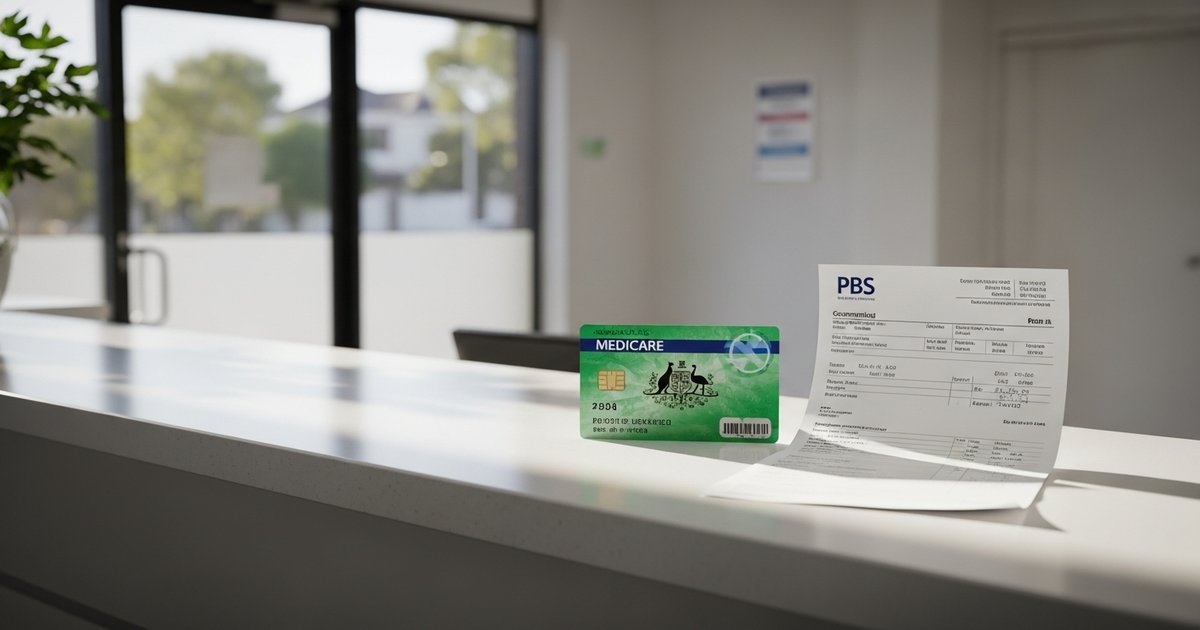
This hub tracks Medicare and the Pharmaceutical Benefits Scheme in 2026: who qualifies for bulk billing under the expanded incentive, the new $25 PBS co-payment cap, and how the largest investment in Medicare in 40 years actually lands on household wallets. Primary sources are the Department of Health, Disability and Ageing, the PBS website, and Services Australia, cited below.
Bulk billing for all Australians
From 1 November 2025, the bulk billing incentive was expanded to cover all Australians. Before this change, bulk billing incentives mostly applied to concession card holders, pensioners and children under 16. The expansion made an additional 15 million Australians eligible.
Bulk billing is the arrangement where your GP bills Medicare directly and you pay nothing at the visit. Under the Bulk Billing Practice Incentive Program (BBPIP), general practices that bulk bill all Medicare-eligible patients for all eligible services receive an additional 12.5 percent incentive payment, split evenly between the GPs and the practice.
How much is Medicare actually investing
The Australian Government is making a $7.9 billion investment to expand bulk billing access. This is the largest single investment in Medicare since the scheme began over 40 years ago.
PBS prescription prices 2026
From 1 January 2026, the maximum cost of a PBS prescription dropped from $31.60 to $25 per prescription for general (non-concessional) Medicare card holders. The concessional co-payment remains at $7.70 per prescription and is frozen at that level until 2030.
- General PBS co-payment: $25 (reduced from $31.60 in 2026).
- Concessional co-payment: $7.70 (frozen until 2030).
- PBS Safety Net threshold: when your out-of-pocket medicine spend exceeds the threshold, subsequent prescriptions drop to the concessional rate (general) or are free (concessional). Check your PBS Safety Net balance via myGov or your pharmacy.
How to find a bulk billing GP near you
Use the Healthdirect service finder at healthdirect.gov.au or the Australian Government's Health Direct tool to find GPs and check whether they bulk bill. Not every GP bulk bills even under the expanded incentive, so confirm directly when booking.
What this does not cover
- Specialist consultations are not always bulk billed. Medicare pays a rebate; you may pay a gap fee.
- Dental care is not generally covered by Medicare (except for children under the Child Dental Benefits Schedule and limited public schemes).
- Private hospital stays and many elective procedures require private health insurance or out-of-pocket payment.
Related: private health insurance
The Medicare levy is 2 percent of taxable income for most earners. The Medicare levy surcharge is an additional 1 to 1.5 percent for higher earners who do not hold an appropriate level of private hospital cover. The income thresholds for the surcharge are reviewed annually and indexed in line with wages growth.